
What’s the longest marathon time in history? If you guessed over 54 years, you’re right.
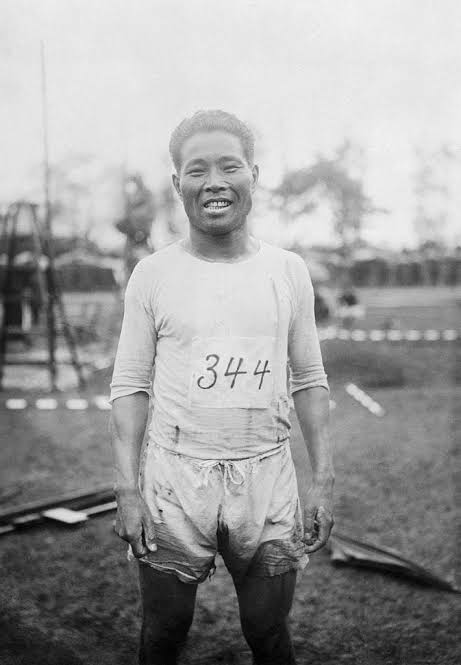
In 1912, Japanese marathon runner Shizo Kanakuri competed at the Stockholm Olympics. Kanakuri was the first athlete from Japan to qualify for the Olympics, and he traveled on the Trans-Siberian Railway to reach the event.
Then, during the marathon, Kanakuri vanished from the race. And when he left the marathon, Kanakuri never officially notified race officials.
This is the inspirational story of Shizo Kanakuri and the longest marathon time in history.
Japan’s First Olympians
Japan’s very first Olympic athletes qualified for the 1912 Stockholm Olympics. Shizo Kanakuri held the current world record for a marathon time, and he attended the games with 400m runner Yohiko Mishima.
The journey to the Olympics was not easy. The Japanese athletes had to fund their own travel costs with no support from their country.
A nationwide fundraiser organized by college students raised 1,500 yen to support Kanakuri. The runner’s older brother also contributed 300 yen.
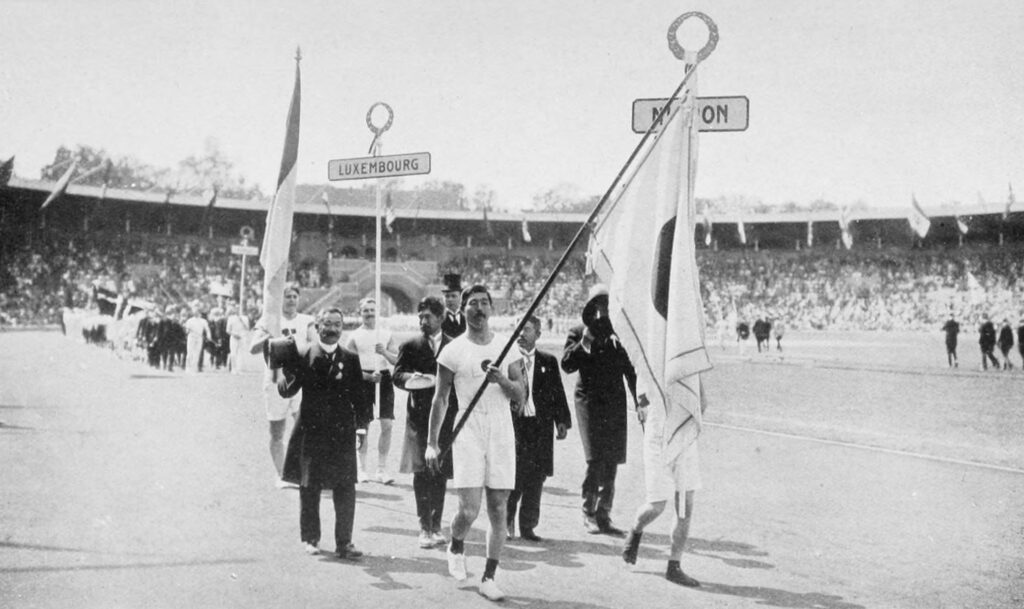
The long journey from Japan to Sweden took 18 days. Kanakuri and Mishima traveled on the Trans-Siberian Railway. The Olympians maintained their fitness by hopping off the train at stations and racing up and down the platform.
Once he reached Sweden, Kanakuri ran into additional problems. Swedish food upset his stomach, and his cloth shoes fell apart on cobblestone roads.
The 1912 Olympic Marathon
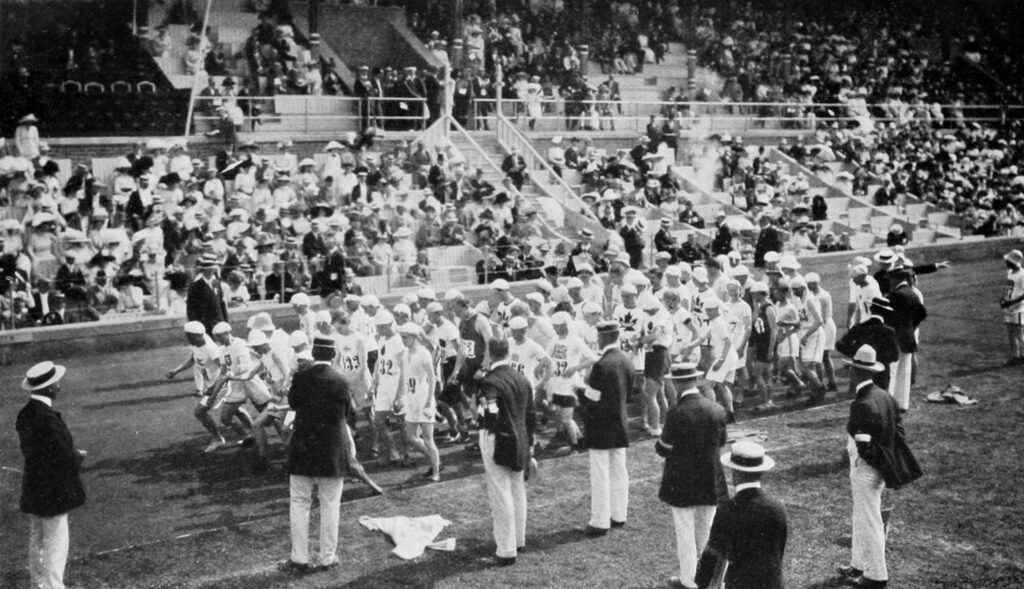
Scorching heat blanketed Stockholm on the day of the marathon at the 1912 Olympics. Temperatures soared toward the 90s. Still, 68 runners lined up at the starting line for the marathon.
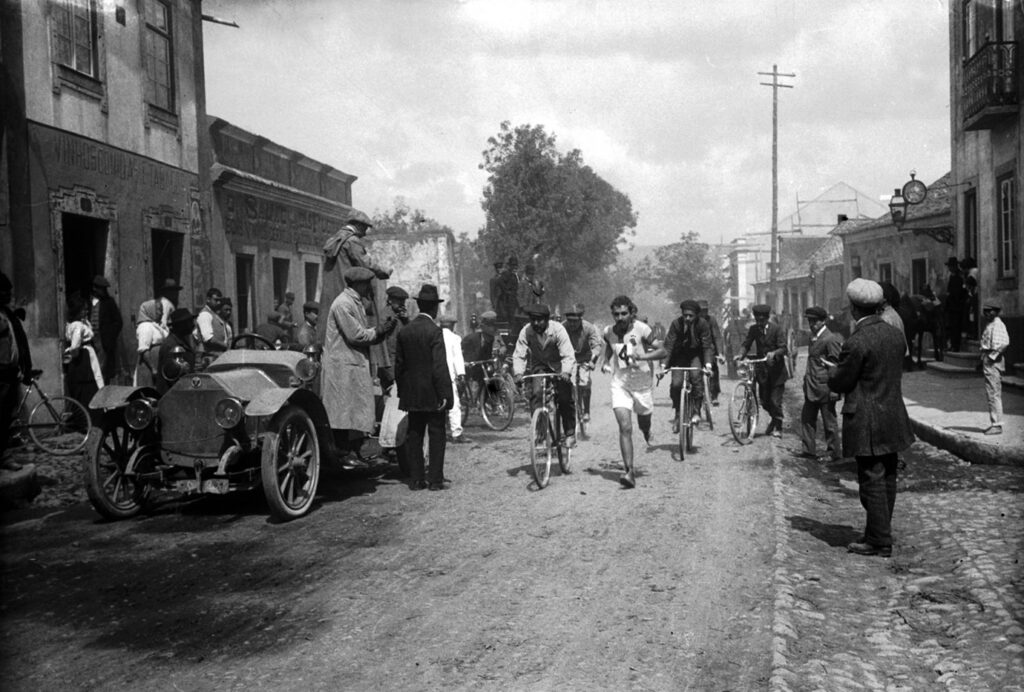
Of those runners, just 34 would cross the finish line. Half of the marathoners dropped out due to the harsh conditions. A Portuguese runner was even hospitalized and died – the first and only death at an Olympic marathon.
Temperatures alone did not make the marathon dangerous. Most long-distance runners also avoided drinking water before and during races. As a result, marathon courses featured few hydration stations.
At the 1904 Olympic marathon, the race had just one station offering water along the route – and the 1912 Olympic marathon featured only four hydration stations. In contrast, the 2024 Olympic marathon featured 13 refreshment stations.
Dehydration made the marathon even more dangerous for the runners – and contributed to the high number who did not finish the race.
Shizo Kanakuri at the Marathon
Shizo Kanakuri was among the runners who did not finish the race.
After running more than 16 miles of the course, Kanakuri stopped when he saw a Swedish family drinking orange juice in their yard.
By then, his cloth shoes had been torn up by cobblestones and gravel. The marathoner was dangerously dehydrated. The Swedish family gave Kanakuri orange juice and let him rest on their couch.
The exhausted marathoner fell asleep. By the time he awoke, the race was long over.
Race officials looked for Kanakuri at the finish line. When he never showed up, they feared that he had died. Police listed Kanakuri as a missing person.
A Disappointed Marathoner
“It’s the morning after my defeat,” Shizo Kanakuri wrote in his journal in 1912. “My heart is aching with regret for the rest of my life. It was the most significant day of my life.”
The marathoner also took a lesson away from the race. “Failure teaches success, and I can only wait for the day with fair weather after the rain so that I can clean up my shame. If people want to laugh, laugh.”
Failing to finish the marathon left Kanakuri with resolve. “To wipe off this shame, I will work with all my strength to brush up my marathon skills and raise the prestige of our country.”
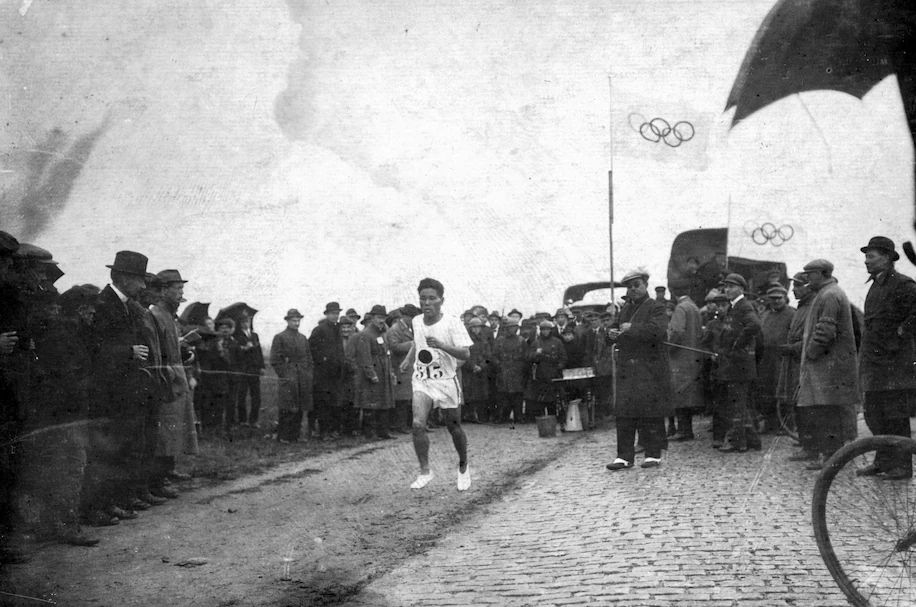
Kanakuri did just that. He continued training back in Japan, where he also taught other long-distance runners, including women who were often excluded from the sport in other countries. Kanakuri also invented the Ekiden, a long-distance relay race still popular in Japan today.
And Kanakuri returned to the Olympics. At the 1920 Olympics in Antwerp, Belgium, Kanakuri ran the marathon in 2 hours, 48 minutes, and 45.4 seconds.
Finishing the Race
More than 50 years after Shizo Kanakuri started his marathon in Stockholm, he returned to Sweden to finish the race.
In 1967, Stockholm once again hosted the Olympic games. Half a century later, the Olympics looked very different. Olympic athletes no longer had to cross a continent by train to attend. The games were also much larger – with television expanding the audience to the entire globe.
Kanakuri had also changed. He was 76 years old in 1967. Now retired, Kanakuri had spent his career as a geography teacher. But he went back to Stockholm and crossed the finish line.
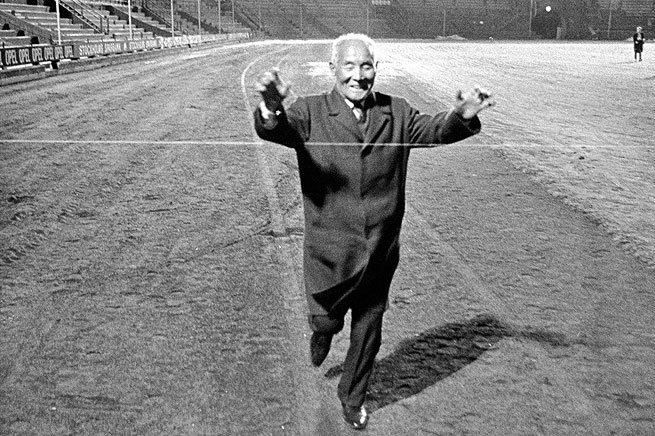
When Kanakuri finally finished the race, his official time was 54 years, 8 months, 6 days, 5 hours, 32 minutes, and 20.3 seconds.
“This concludes all the events from the 1912 Stockholm Games,” declared the stadium announcer.
At the finish line, Kanakuri quipped, “It was a long trip. Along the way, I got married, had six children and 10 grandchildren.”
The Olympic Spirit
Before Shizo Kanakuri officially finished his Olympic marathon, Tokyo hosted its first Olympics in 1964. During the 10,000m event, a Sri Lankan runner named Ranatunge Karunananda was lapped four times by the other runners.
But Karunananda kept going, finishing the race last. At the finish line, the runner declared, “The Olympic spirit is not to win but to take part.”
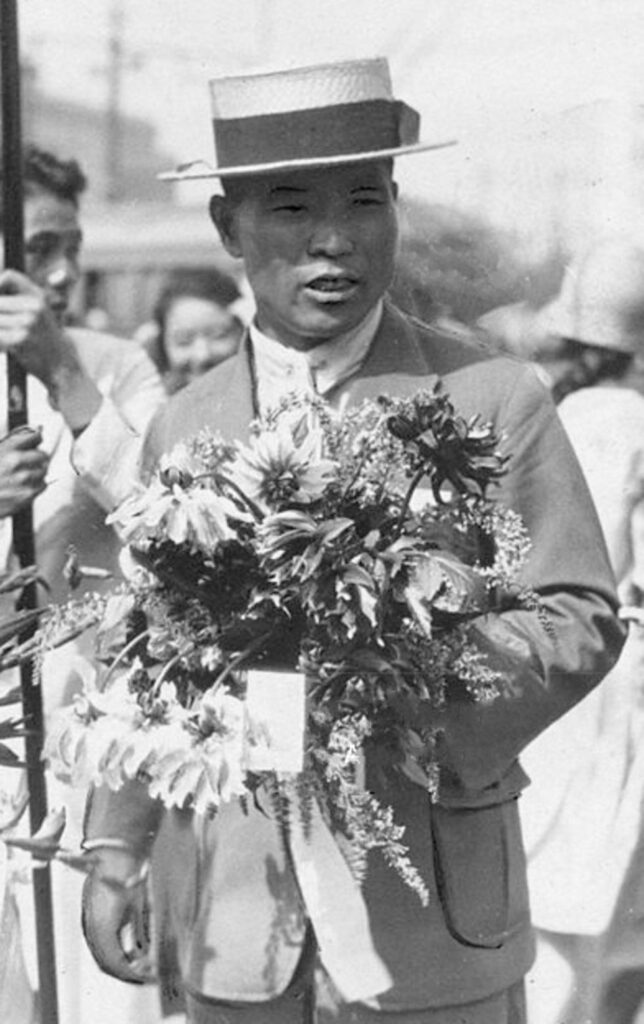
Japan celebrated Karunananda as the “bottom ranked hero” – because, like Shizo Kanakuri, he never gave up.
Discover more strange sports stories by checking out Bruce Wilson’s Strange But True Sports History, available in ebook, paperback, and audiobook.Post navigation