
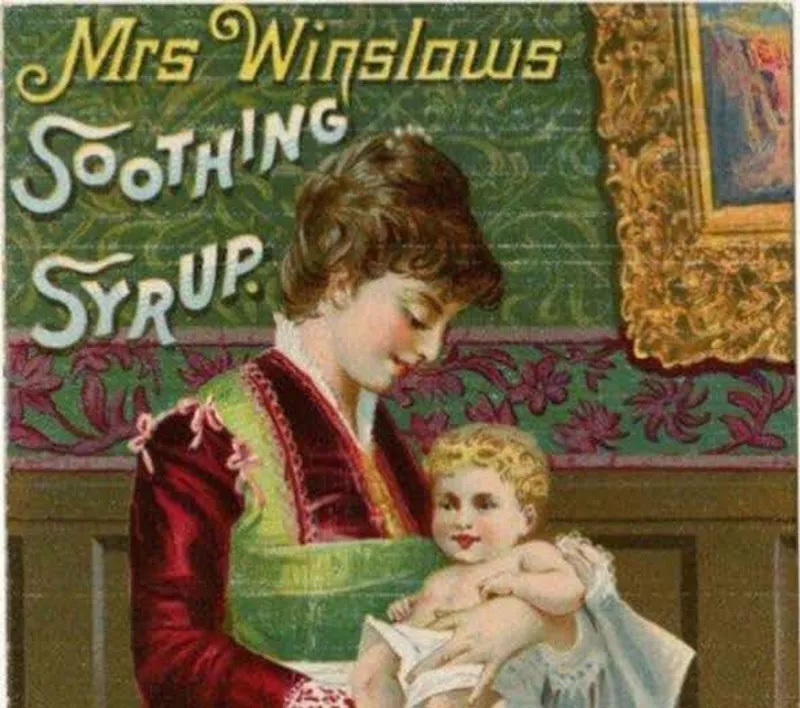
Teething children have fussed since the beginning of mankind. A 19th-century treatment promised to solve the problem – but chemists proved it was a “baby killer.”
Mrs. Winslow’s Soothing Syrup promised to calm teething children while also cleaning their teeth and freshening their breath. Serene babies and glowing mothers in advertisements convinced desperate parents to buy the soothing syrup for their children.
But Mrs. Winslow’s Soothing Syrup had an unexpected ingredient: morphine. Thanks to a heavy dose of morphine and a lot of alcohol, the syrup knocked out children.
Derived from opium, morphine can be fatal for children. Yet it was sold in many patent medicines, which did not require a prescription (or a patent). These medicines did not even need to list the ingredients, so parents did not know they were giving babies morphine.
Why did millions buy a deadly “medicine” for their children for decades? And what finally took the “baby killer” medicine off the shelves?
What Was Mrs. Winslow’s Soothing Syrup?
A pediatric nurse named Charlotte Winslow created Mrs. Winslow’s Soothing Syrup in 1849. Sold across North America by her son-in-law, the syrup promised to soothe teething and crying babies. Since the syrup’s opioids also caused constipation, sellers marketed it as a treatment for diarrhea and dysentery.
The soothing syrup was extremely profitable. In 1868, the owners reported selling over 1.5 million bottles every year. Each bottle cost 25 cents.
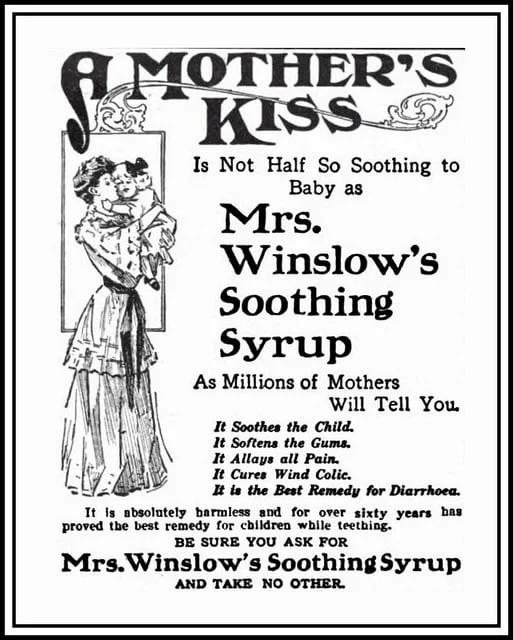
What was actually in the soothing syrup? A heavy dose of morphine and alcohol. Each ounce of the syrup contained 65 mg of morphine. That meant that a teaspoon of the syrup had a deadly dose of morphine for most children.
Most of the millions of children dosed with soothing syrup lived. But many were knocked out by the heavy dose of morphine and never woke up. Estimates reveal that thousands died from overdose.
In an era of high child mortality, parents often did not link the deaths to the syrup. And patent medicines did not even list the ingredients they contained. As a result, parents never knew they were giving their babies deadly “medicine.”
Harvey Washington Wiley and the Poison Squad
In the late 19th century, chemists began researching the contents of patent medicines and the American food supply. Harvey Washington Wiley was one of those chemists.
When he put milk under the microscope, Wiley found chalk and plaster of Paris. “Fresh” foods often contained borax, a cleaning product. Canned goods, increasingly popular to preserve food, frequently carried formaldehyde.
In 1902, Wiley created the “Poison Squad.” Made up of volunteers with strong stomachs, the recruits promised to eat foods dosed with potentially dangerous ingredients. Wiley believed it was the only way to scientifically prove the harmful additives in American foods.
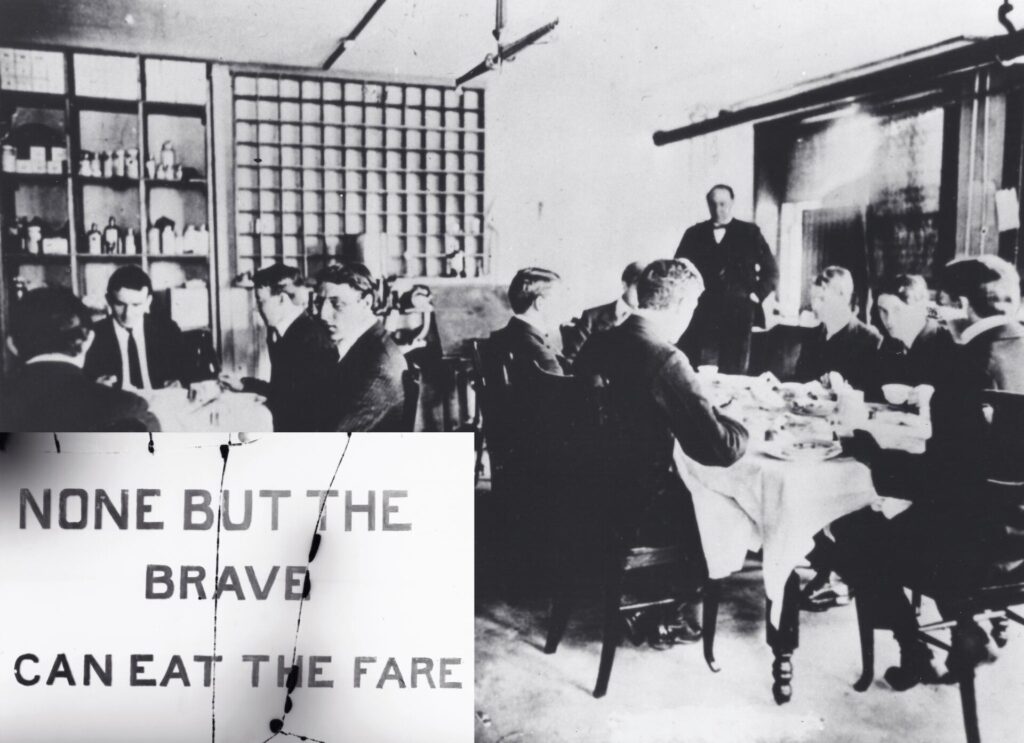
The human guinea pigs received $5 a month for their service. “None but the brave cat eat the fare,” warned a sign outside the Department of Agriculture kitchen that served participants. For a year, recruits ate food containing borax, copper sulfate, and other additives.
Wiley and the Poison Squad proved that borax triggered headaches and stomachaches. Copper sulfate harmed the kidneys. Even healthy men were left nauseous and vomiting after consuming the food.
The results of the Poison Squad helped push Congress to pass the Pure Food and Drug Act in 1906. Known as the “Wiley Act,” it created the Food and Drug Administration. Wiley would serve as its first head.
Labeling Mrs. Winslow’s Soothing Syrup
The FDA declared that foods and medicines had to include labels that listed ingredients. Mrs. Winslow’s Soothing Syrup and other patent medicines could still contain morphine, alcohol, opium, or other ingredients – but customers had to know the ingredients.
In spite of the dangers and the new labels, desperate parents still bought the soothing syrup, even after knowing what the “medicine” contained. Simply labeling the dangerous ingredients was not enough to take the soothing syrup off the shelves.
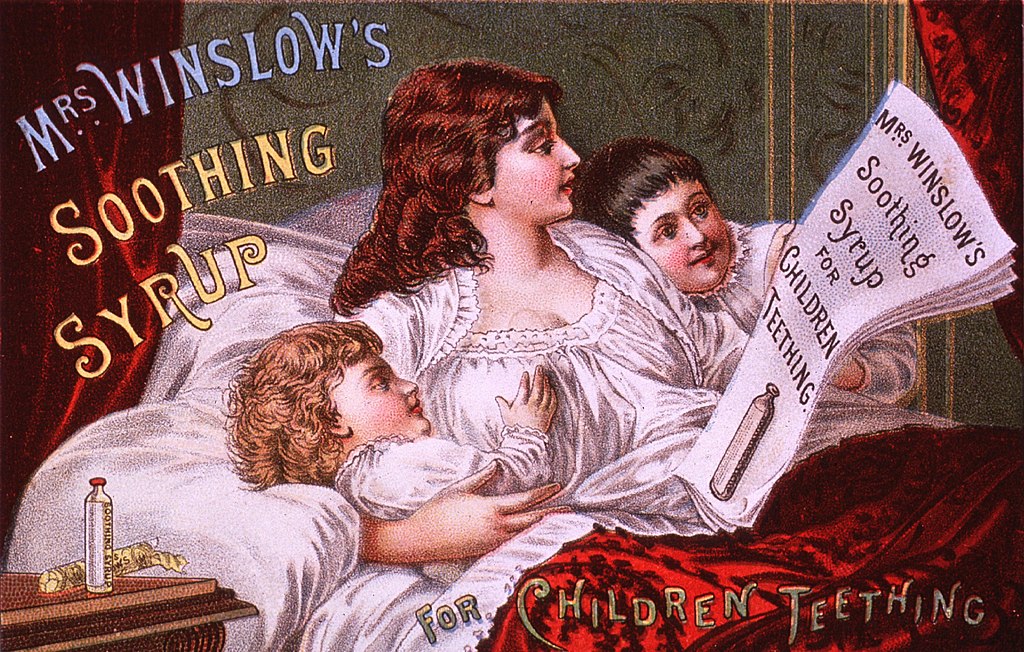
Instead, public outcry and medical warnings finally removed Mrs. Winslow’s Soothing Syrup from the shelves. The American Medical Association declared that Mrs. Winslow’s Soothing Syrup was dangerous in 1911. Doctors described the syrup as a “baby killer.” And newspaper warned, “If you value your child’s health and life, never use any of these preparations.”
Still, it took years to convince the public of the danger. The morphine-laced syrup remained on the shelves until the 1930s.
For more strange and fascinating stories from history, check out Bruce Wilson’s book Strange but True Stories: Fascinating Facts, Astonishing Trivia, and Conversation Starters from History, available in ebook, paperback, or audiobook.