
Ethiopian runner Abebe Bikila never planned to run a marathon without shoes. And even barefoot, he made history.
At the first modern Olympics in 1896, the route stretched from Marathon to Athens, charting the same path as the very first marathon back in 490 BCE.
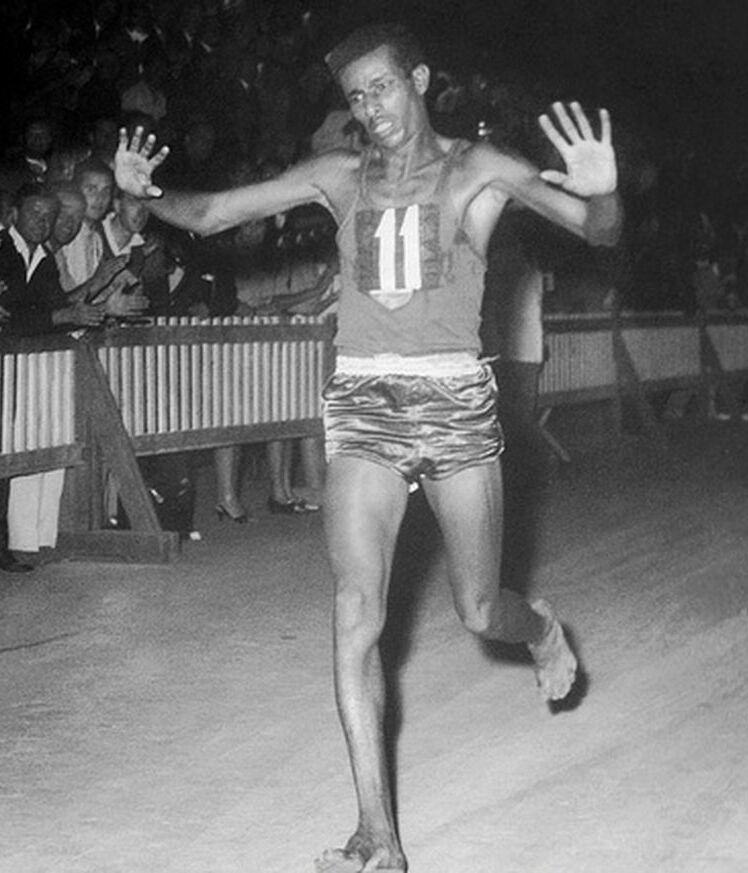
And at the 1960 Olympic marathon, Ethiopian runner Abebe Bikila made history – and he did it running barefoot.
The Road to Rome
Abebe Bikila nearly didn’t attend the 1960 Rome Olympics. Born in a rural village in 1932, Bikila was the son of an Ethiopian shepherd. As a young adult, Abebe left his village behind for Addis Ababa, where he joined the Imperial Guard protecting Ethiopia’s emperor.
While training Ethiopian soldiers, a Swedish coach noticed Bikila. The coach suggested that Bikila train as a marathon runner.
Bikila was fast, but he wasn’t considered Ethiopia’s best runner in 1960 – that title went to teammate Wami Biratu, who planned to compete in Rome’s marathon. But when sickness took down Biratu just days before the Olympics, Bikila subbed in.
The last-minute change left Bikila with a big problem: he’d arrived at the Olympic games with only a single pair of shoes, and they’d been used so heavily in training that they were too worn out for the race.
Scrambling before the race, Abebe bought new running shoes and tried to break them in. But the new shoes gave him blisters. Instead of giving up, Bikila took off his shoes and ran barefoot.
Running Through Roman Ruins
When Bikila arrived in Rome, he was a complete unknown. “Who’s this Ethiopian?” asked one sports commentator.
But on marathon day, the world learned his name.
At the starting line, Abebe Bikila lined up behind the other runners. He wore red shorts, a green vest, and no shoes. Because of a heat wave, the race started on a hot afternoon and ended at night.
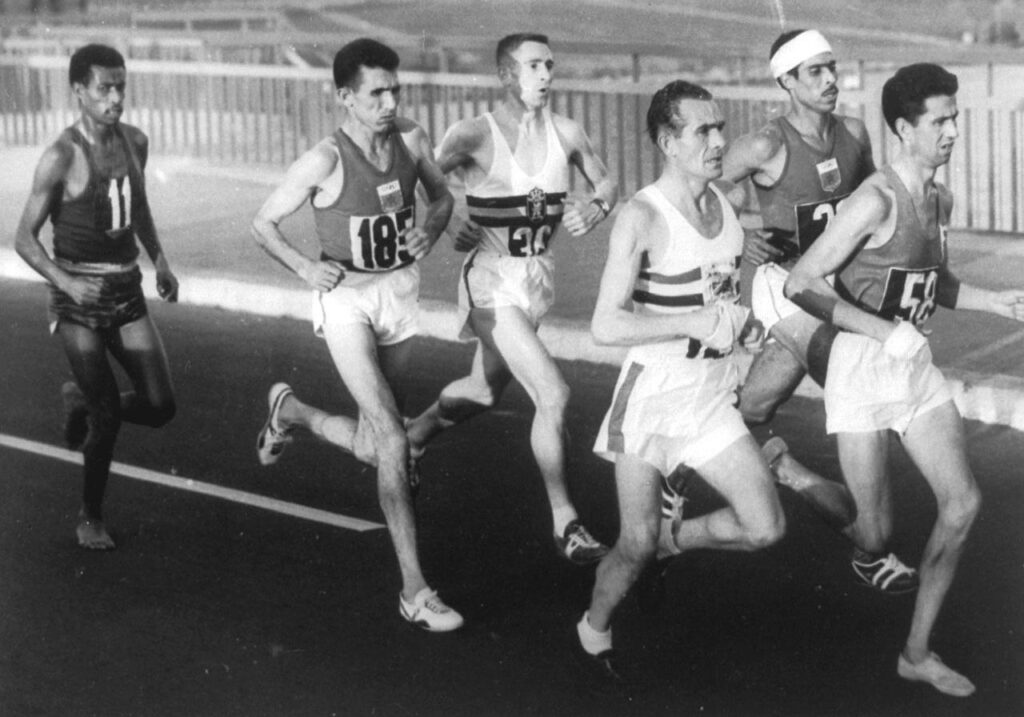
The 1960 marathon course took runners through ancient Rome’s monuments, past the Forum and the Coliseum, before leaving Palatine Hill behind for the Italian countryside.
For most of the race, Bikila was happy to let other runners take the lead.
“With the English Kiley, there’s the Irishman Messipy [Messitt], the Belgian Van der Blicher, the Moroccans Rhadi and Saudy, and there’s that unknown Ethiopian we saw earlier,” a commentator said during the race. “He’s called Abebe Bikila. He’s barefoot.”
The sun set as the runners charged up the Appian Way, an ancient Roman road lined with cypress trees. Less than a mile from the finish line, Bikila picked up the pace. He passed the favorite, a runner from Morocco, to take the lead.
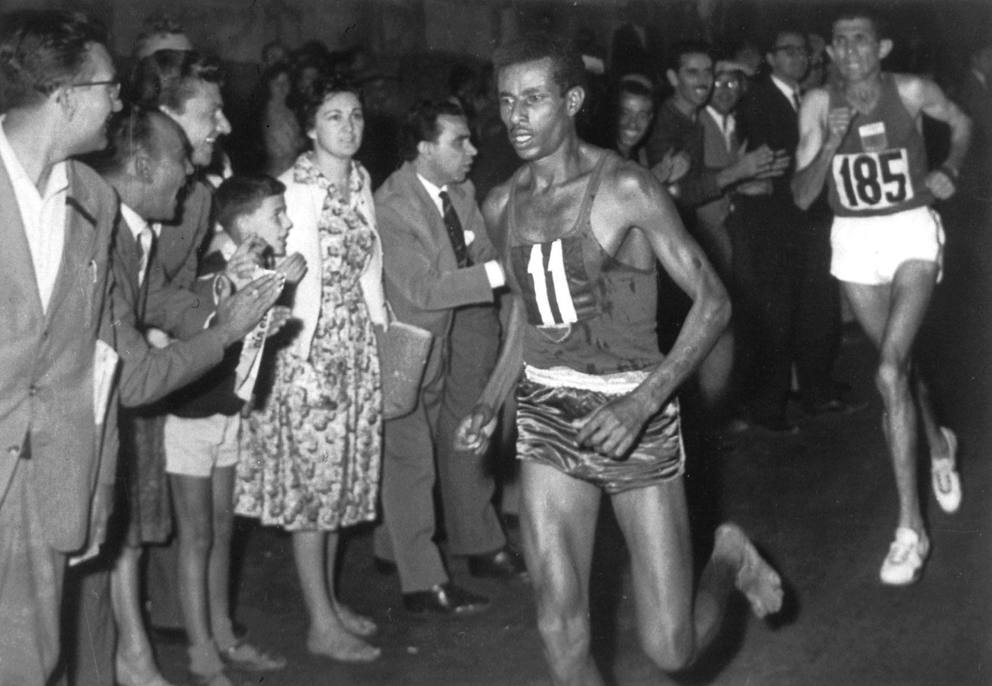
In the final meters of the race, Bikila sprinted so fast that he beat second place by more than 25 seconds.
And when Bikila crossed the finish line, he broke the world record. What was Abebe Bikila’s marathon time? 2 hours, 15 minutes, 16 seconds.
As he celebrated at the finish line, the Ethiopian champion claimed he could have run another 9 miles.
Abebe Bikila’s Olympic Return
Why did Abebe Bikila run barefoot in the Olympic marathon? “I wanted the world to know that my country, Ethiopia, has always won with determination and heroism,” Bikila said.
Bikila was the first Black African to win a gold medal at the Olympics. He inspired generations of African distance runners.
Four years later, at the 1964 Tokyo Olympics, Bikila returned to defend his title. And just like in Rome, where Bikila had to overcome a problem with his shoes, the defending champion faced an even bigger challenge in Tokyo.
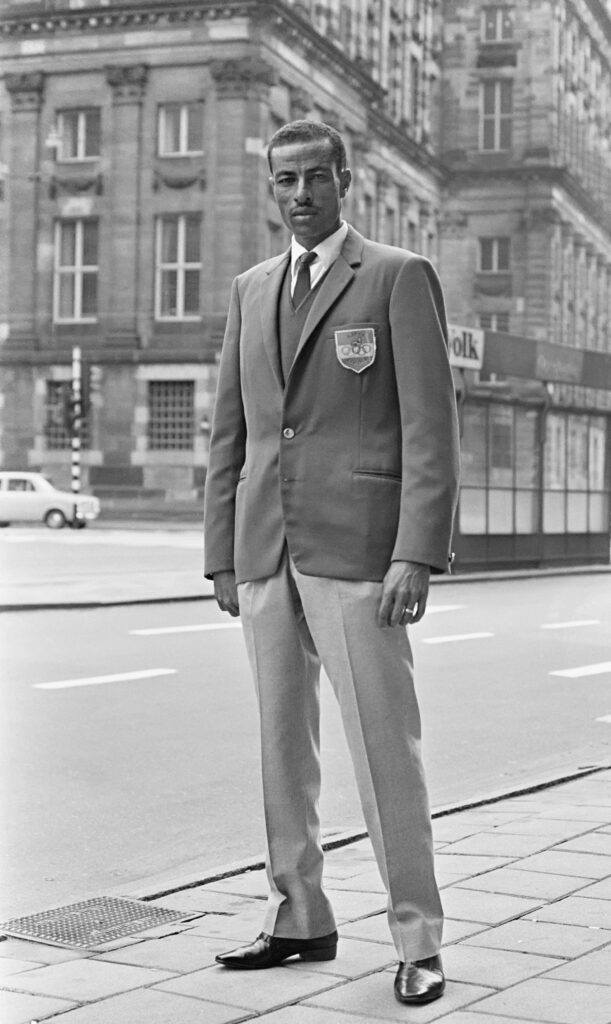
Forty days before the marathon, Bikila underwent emergency surgery to remove his appendix. Yet, somehow, he managed to recover from surgery in time for the Olympics.
At the Tokyo marathon, Bikila wore shoes. And the shoes didn’t slow him down – Bikila broke his own world record, running the marathon at a pace of 2 hours, 12 minutes, 11 seconds.
The Ethiopian runner became the first person in Olympic history to win back-to-back gold medals in the marathon.
Between 1960 and 1966, Bikila competed in 13 international marathons. He only lost once.
The Legacy of Abebe Bikila
Thousands celebrated Abebe Bikila’s return to Ethiopia after his gold medal victory in 1960. And so did Ethiopia’s emperor, who Bikila had once protected as an imperial guardsman.
Emperor Haile Selassie awarded the runner the Star of Ethiopia. He also gifted Bikila a house and a Volkswagen Beetle.
The British were stunned that an unknown runner won the 1960 Olympic marathon, reporting, “It is a scene to remember – a moment of theatrical drama; a moment so unusual in modern world athletics, when a virtual unknown from an insignificant country crosses the seas and conquers the heroes.”
Bikila might have been unknown at the starting line of the Rome marathon, but he was a gold medalist by the time he reached the finish line.
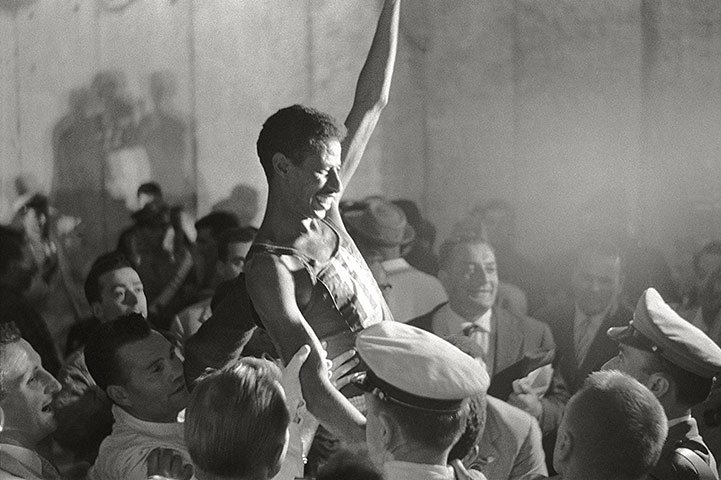
“Normally champions rise up the rankings and so when they get to the top they are known, but Bikila was utterly unknown,” according to Bikila’s biographer Tim Judah. “So this compounded the shock – a barefoot African winning the marathon.”
Ethiopia’s gold medal came just 25 years after Italy – the host country at the 1960 Olympics – annexed Ethiopia. And the victory also came during a wave of African independence movements.
“If you look what happened to Africa, independence started after Abebe Bikila won in Rome,” said Haile Gebrselassie, an Ethiopian Olympic distance runner.
Bikila’s victory was more than a personal achievement. It was a statement to the world that an African shepherd’s son could beat the fastest runners in the world barefoot.
Discover more strange sports stories by checking out Bruce Wilson’s Strange But True Sports History, available in ebook, paperback, and audiobook.